Looking for a broader overview? Check out our comprehensive guide on AI Image Generation 2026: Everything You Need to Know.
| Feature | Canva AI | Ideogram | Leonardo AI | Midjourney |
|---|---|---|---|---|
| Free Plan | ✗ | ✗ | ✗ | ✗ |
| Pro Price | — | — | — | — |
| Elite Price | — | — | — | — |
| API Access | ✗ | ✗ | ✗ | ✗ |
| Rating | 4.5/5 | 4.5/5 | 4.5/5 | 4.5/5 |
| Get Started | Visit Canva AI | Visit Ideogram | Visit Leonardo AI | Visit Midjourney |
Introduction
Let’s be real for a second. If you’ve spent any time trying to generate images with AI in the last year, you know the landscape is a minefield. Some tools produce gorgeous results but cost a fortune; others are cheap but generate hands that look like Lovecraftian horrors. I’ve been testing these platforms since the early days of DALL-E 2, and I’ve seen the hype cycles come and go.
In this roundup, I’m cutting through the noise. I’ve personally burned through thousands of credits, rendered hundreds of images, and compared the output side-by-side for real-world use cases—not just the curated galleries on social media. I’m looking at Canva AI, Ideogram, Leonardo AI, and Midjourney.
If you are a graphic designer, a solo content creator, or a marketer who needs to stop spending $50 per stock photo, this guide is for you. We’re going to look at the brutal truth: what each tool actually sucks at, not just what it’s good at.
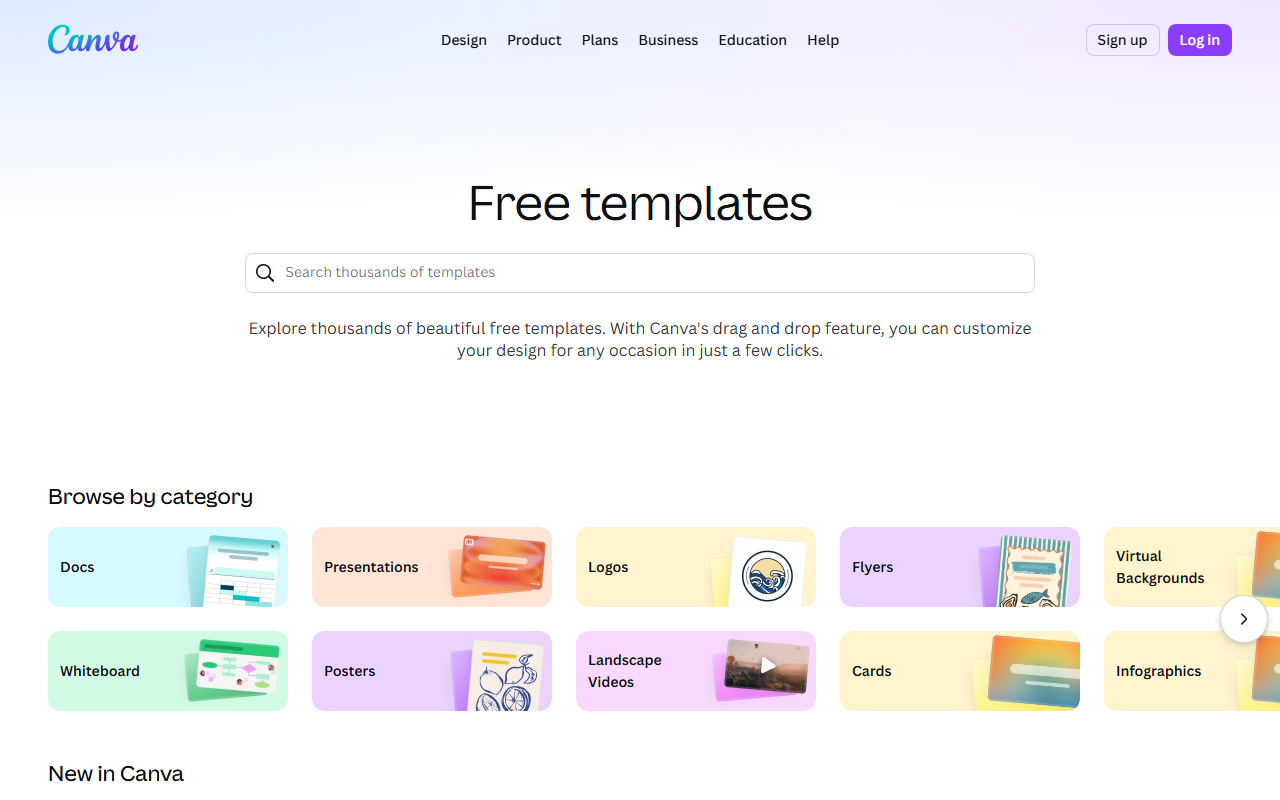
Canva ai Interface
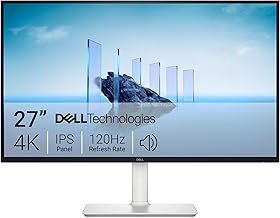
Hardware Recommendation: Dell S2722QC 27 inch 4K monitor
Canva AI (Magic Media)
The Pitch: Generative AI baked directly into the world’s most popular design dashboard. No separate app, no steep learning curve.
Canva’s approach is the ultimate “good enough” strategy. If you already live inside Canva for your social media graphics, presentations, or thumbnails, the AI image generator (called Magic Media) is just another button. You type a prompt, you get four images, you drag one onto a template. It’s that simple.
My Experience: I used Magic Media to generate a batch of hero images for a blog post about “minimalist home offices.” The results were… fine. They looked clean, but lacked the depth and texture you get from Midjourney. Where Canva shines is integration. I was able to immediately remove the background, add text overlays, and export a full social media carousel in under 10 minutes. I never left the browser tab.
Brutal Honesty: The resolution is capped. You cannot upscale to print quality. The style variety is limited compared to dedicated tools. And the prompt adherence? It’s probably the weakest of the four. If you ask for “a photorealistic cat wearing a monocle,” you might get a cartoon cat in a hat. It’s not a creative powerhouse; it’s a productivity shortcut.
Ideal Use Case: Non-designers who need passable visuals fast. Social media managers who need 20 variations of a blog header. Small business owners who have zero budget for a designer.
Pricing: Free tier gives you 50 lifetime credits (very limited). The Canva Pro subscription ($12.99/month) unlocks unlimited AI image generation, background removal, and brand kits. For most users, the Pro plan is the only way to get real value.
Leonardo ai Interface

Ideogram
The Pitch: The best text rendering in the business. If you need AI to generate images with legible words, this is your only real choice.
If you’ve ever tried to get Midjourney or DALL-E 3 to write “Grand Opening” on a banner, you know the pain. The letters look like alien glyphs or scrambled runes. Ideogram solved this problem early. It uses a proprietary “text rendering” model that actually places letters on signs, posters, and t-shirts correctly.
My Experience: I needed a mockup for a coffee shop menu board. I typed: “A chalkboard menu with the text ‘Espresso $3.50’ and ‘Latte $4.00’.” Ideogram nailed the spelling and placement on the first try. I also tested it for a YouTube thumbnail with the word “TRENDING” in bold block letters. It worked. The image quality is good—not quite Midjourney level—but the text accuracy is a superpower.
Brutal Honesty: The image style is less “artistic” than Midjourney. It can feel a bit flat or “digital” by default. The community features are sparse. Also, the free tier is generous (100 credits/day), but the paid plans get expensive quickly if you are generating high volumes.
Ideal Use Case: T-shirt designers who need mockups with text. Marketers creating social media ads with headlines. Anyone who needs a “sign” or “poster” in their scene.
Pricing: Free tier exists. The Basic plan starts at $7/month (for 400 credits). The Plus plan at $20/month is the sweet spot for serious users. The Pro plan ($40/month) unlocks unlimited fast generation.
Leonardo AI
The Pitch: The ultimate control panel. If you want to tweak every parameter, train your own model, and generate assets for video games, this is your sandbox.
Leonardo AI is the antithesis of “one-click magic.” It gives you a canvas, a massive library of community models (think: “Anime Style,” “Realistic Vision,” “Concept Art”), and a slider for everything. You can control image dimensions, guidance scale, seed values, and even use a “Canvas Editor” to inpaint specific areas.
My Experience: I used Leonardo to generate a series of environmental concept art for a fantasy RPG setting. I selected the “Cinematic” model, set the resolution to 1536×1024, and used a negative prompt to avoid “blurry, low quality, bad anatomy.” The results were stunning. The level of detail—stone textures, lighting effects, atmospheric fog—was far superior to what I got from Canva or Ideogram. I also tested the “Real-Time Generation” feature, which is incredible for brainstorming. You draw a rough sketch, and it fills in the details instantly.
Brutal Honesty: The learning curve is steep. A new user will be overwhelmed by the interface. The free tier gives you 150 tokens per day, but a single high-resolution generation can cost 10-20 tokens. You will burn through them fast. Also, the image quality, while high, can sometimes have a “generative AI” tell—slightly glossy surfaces or weird fabric textures.
Ideal Use Case: Game developers, 3D artists, and power users who want granular control. Anyone who wants to train a custom LoRA (a small AI model) on a specific character or style.
Pricing: Free tier is good for testing. The Apprentice plan ($10/month) gives you 2,500 tokens. The Artisan plan ($24/month) is the standard. The Maestro plan ($48/month) is for heavy users. If you are generating for commercial use, the pricing is extremely competitive.
Midjourney
The Pitch: The gold standard for aesthetic quality. If you want images that look like they belong in a magazine, a gallery, or a AAA game trailer, this is the benchmark.
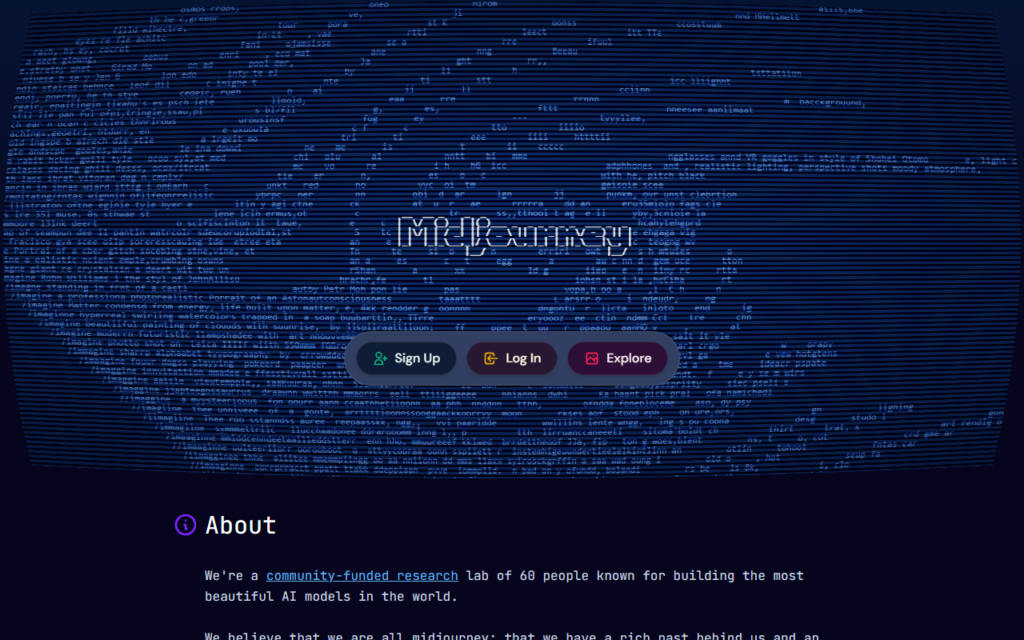
Midjourney is the undisputed king of “vibe.” Its models are trained to produce images that are moody, dramatic, and visually cohesive. It excels at lighting, composition, and color harmony. The community is massive, and the style references (called “sref” codes) allow you to clone the look of any popular artist or photographer.
My Experience: I used Midjourney to generate a hero image for a luxury watch brand landing page. I prompted: “A macro shot of a mechanical watch on a marble surface, golden hour lighting, bokeh background, shot on Hasselblad, hyper-realistic.” The result was indistinguishable from a professional product photo. I also tested it for “steampunk cityscape at dusk” and got an image that I immediately wanted to print and frame. The quality is simply a tier above the rest.
Brutal Honesty: The user experience is terrible. It only works inside Discord. There is no web app (unless you use third-party tools). The learning curve for prompting is significant. You need to learn parameters like --ar 16:9, --style raw, --v 6.1. Also, it is expensive. The base plan is $10/month for 3.3 hours of GPU time, which goes fast. The $30/month plan gives you 15 hours. Also, Midjourney has a strict content policy; you cannot generate photorealistic faces of public figures or NSFW content.
Ideal Use Case: Professional designers, art directors, and photographers who need high-end visuals. Anyone who values artistic quality over speed or ease of use.
Pricing: Basic plan ($10/month). Standard plan ($30/month) which includes unlimited relax generations. Pro plan ($60/month) for commercial teams. You pay for the quality.
Buying Guide: How to Choose the Right AI Image Generator
Don’t just pick the most popular one. Pick the one that matches your workflow.
Consider Your Skill Level
If you are a complete beginner who just needs a quick header image for a blog post, Canva AI is the obvious choice. If you are a designer who wants to push the boundaries of the technology, skip Canva and go straight to Midjourney or Leonardo.
Consider Your Output Needs
Do you need text in the image? Ideogram is non-negotiable. Do you need high-res assets for print or game textures? Leonardo gives you the resolution and control. Do you need the most beautiful, portfolio-worthy image possible? Midjourney.
Consider Your Budget
If you are on a shoestring budget, start with the free tiers of Ideogram and Leonardo. They are generous. If you have a monthly budget of $12, Canva Pro gives you the best value because it bundles AI with a full design suite. If you are a professional charging clients, the $30/month for Midjourney pays for itself with one good image.
Consider Your Hardware
All of these tools run in the cloud, so you don’t need a powerful GPU. However, if you are using Leonardo for heavy real-time generation, a good monitor makes a difference. I recommend the Dell UltraSharp U2723QE for its excellent color accuracy, or the BenQ PD2725U for designers who need 4K resolution and a wide color gamut. A good drawing tablet, like the Wacom Intuos Small, is also a game-changer for inpainting and refining AI-generated images in Photoshop.
FAQ
Frequently Asked Questions
Which AI image generator is completely free?
Frequently Asked Questions
Can I use these images for commercial projects?
Frequently Asked Questions
Which tool is best for photorealistic portraits?
Frequently Asked Questions
Can I generate images with specific text (logos, signs)?
Frequently Asked Questions
Which tool has the best inpainting (editing specific parts of an image)?
Canva ai vs Ideogram
2026’s Best Ai Image Generator
Canva ai
Production design suite- Templates to finished assets
- Brand-kit workflow
- Fast social content output
Ideogram
Creative workflow- Visual quality
- Control and iteration
- Publishing workflow
Choose the tool that gets you closest to a publishable visual asset with the least cleanup.