Looking for a broader overview? Check out our comprehensive guide on AI Image Generation 2026: Everything You Need to Know.
| Feature | Canva AI | ChatGPT | Ideogram | Midjourney |
|---|---|---|---|---|
| Free Plan | ✗ | ✓ | ✗ | ✗ |
| Pro Price | — | $20/mo | — | — |
| Elite Price | — | $25/mo | — | — |
| API Access | ✗ | ✓ | ✗ | ✗ |
| Rating | 4.5/5 | 4.8/5 | 4.5/5 | 4.5/5 |
| Get Started | Visit Canva AI | Visit ChatGPT | Visit Ideogram | Visit Midjourney |
Introduction
Let’s be blunt: 2025 was the year AI image generators went from “cool party trick” to “legitimate design tool.” But as we barrel into 2026, the hype has settled, and the real workhorses have emerged. I’ve spent the last few weeks stress-testing the four biggest names in the space—Canva AI, ChatGPT, Ideogram, and Midjourney—to find out which one actually deserves your money (and your time).
I’m not here to sell you on “the future of creativity.” I’m here to tell you which tool nails the brief, which one still hallucinates fingers, and which one is best for your specific workflow. Whether you’re a freelance designer, a small business owner, or a marketer drowning in content requests, this guide will help you pick the right engine for your visual output.
Before we dive in, a quick note on hardware: if you’re planning to spend serious time iterating on AI images, you’ll want a monitor that doesn’t lie to you. I’ve been using the Dell UltraSharp U2723QE for color-critical work—its IPS Black technology gives you real contrast without the glow of a cheap panel. Pair that with a Wacom Intuos drawing tablet if you plan to do any manual touch-ups; it’s a game-changer for refining AI-generated details.
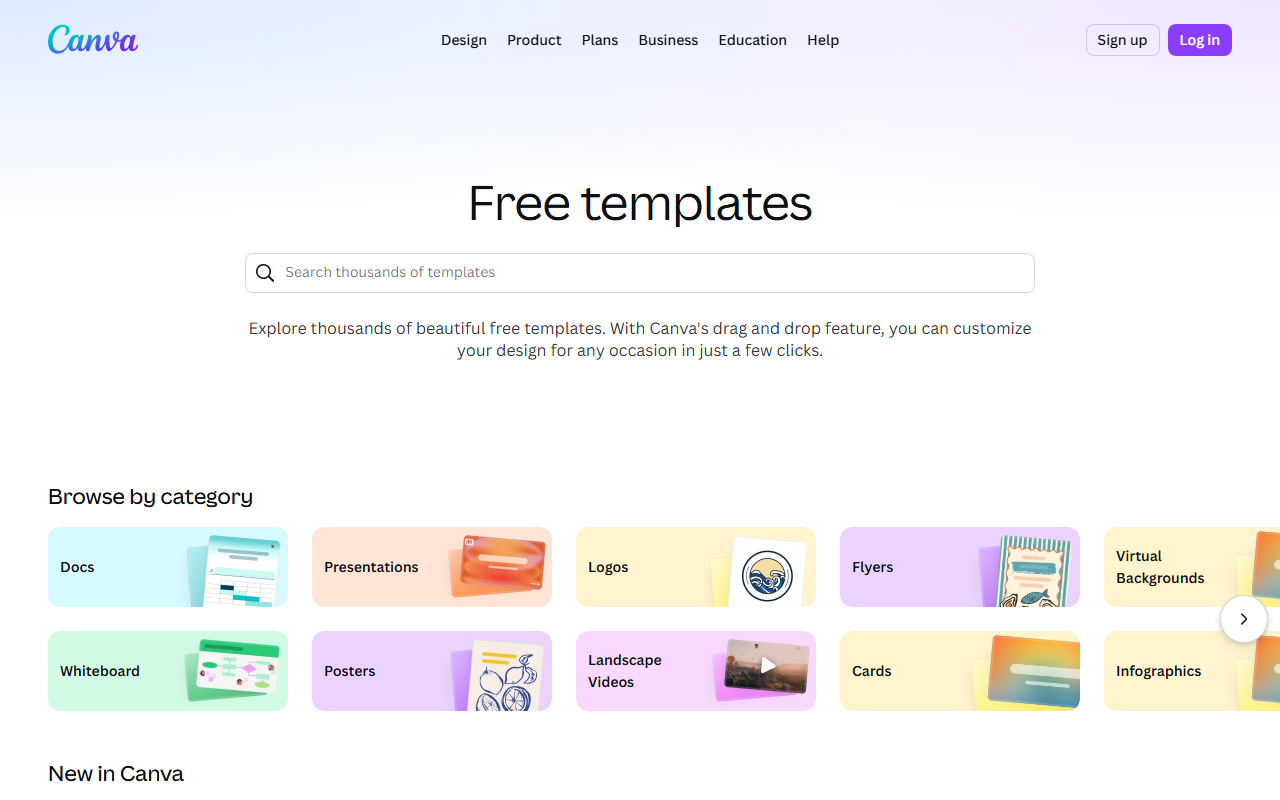
Canva ai Interface
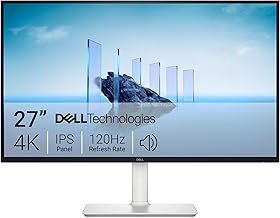
Hardware Recommendation: Dell S2722QC 27 inch 4K monitor
Canva AI (Magic Studio) – The Swiss Army Knife
Unique Selling Proposition: Canva AI isn’t a standalone image generator—it’s a full design ecosystem with AI baked in. The “Magic Studio” suite includes Magic Media (text-to-image), Magic Edit (generative fill), and Magic Expand (outpainting). The real killer feature is Brand Kit integration: you can upload your brand colors, fonts, and logos, and the AI will generate images that stick to your guidelines. No other tool on this list does that natively.
Ideal Use Case: Social media managers, small business owners, and anyone who needs to produce a high volume of on-brand visuals without a design team. If your workflow already lives in Canva, this is a no-brainer.
Testing Notes: I generated a series of product mockups for a fictional coffee brand. The AI correctly replicated the hex codes from my Brand Kit, but it struggled with complex compositions—a “barista pouring latte art” came out looking like a blurry Rorschach test. For simple backgrounds, banners, and social posts, it’s fast and reliable. The 1:1 square format is its sweet spot.
Pricing: Canva Pro is $12.99/month (annual) and gives you 500 AI credits per month. The free tier exists but is heavily rate-limited (50 credits). For heavy users, the Canva Teams plan at $14.99/person/month is better value.
My Experience: Canva AI feels like training wheels for image generation. It’s safe, predictable, and rarely offensive. But if you want photorealism or artistic flair, you’ll hit a ceiling fast. It’s a great utility tool, not a creative one.
Verdict: 7.5/10. Best for speed and brand consistency. Not for serious artists.
ChatGPT (DALL-E 3 Integration) – The Conversational Powerhouse
- Best natural language understanding
- Huge plugin ecosystem
- Free tier available
- GPT-4o included in Plus
- Can hallucinate
- Rate limits on free tier
- No real-time web on free

Unique Selling Proposition: ChatGPT’s image generation runs on OpenAI’s DALL-E 3 model, but the real magic is the conversational interface. You can iterate naturally: “Make the sky more purple,” “Now add a vintage car,” “No, make it a 1967 Mustang.” The AI remembers context across the entire chat, so you don’t have to re-engineer your prompt each time. It also excels at text rendering—a notorious weak spot for most AI models. I got readable signage and book covers without the usual gibberish.
Ideal Use Case: Writers, bloggers, and content marketers who need quick, illustrative images to accompany text. Also great for brainstorming visual concepts before handing them to a human designer.
Testing Notes: I asked ChatGPT to generate a “photorealistic image of a cyberpunk detective walking through a rainy Tokyo alley, with neon signs reading ‘RAMEN’ and ‘SAKE’.” The text was 90% accurate—a massive improvement over Midjourney v5. However, the photorealism isn’t quite there yet; skin textures look slightly waxy, and lighting can be inconsistent. The 4:3 landscape format is the default, but you can specify square or portrait.
Pricing: ChatGPT Plus is $20/month and includes DALL-E 3 access (limited to about 40 images every 3 hours). The free tier only offers DALL-E 2, which is a significant downgrade. For heavy users, the ChatGPT Pro plan at $200/month removes rate limits and adds priority compute.
My Experience: The conversational loop is addictive. I spent an hour tweaking a single image of a “steampunk owl,” and the AI remembered every change. But the quality cap is real—DALL-E 3 is good, not great. It’s my go-to for concept art and blog headers, but I wouldn’t print it.
Verdict: 8/10. Best for iterative brainstorming and text-heavy designs. Not for high-res print work.
Ideogram – The Typography Titan
Unique Selling Proposition: Ideogram was literally built to solve the “text problem.” While other models turn letters into squiggles, Ideogram’s text rendering engine is industry-leading. It can generate logos, t-shirt designs, posters, and memes with crisp, readable text—even in complex fonts. It also offers upscaling up to 4x and a “Magic Prompt” feature that auto-expands your brief into a detailed prompt.
Ideal Use Case: Graphic designers, merch creators, and anyone who needs AI-generated typography for commercial use. If your project relies on text-as-image (e.g., a band poster, a book cover, a quote graphic), Ideogram is your best bet.
Testing Notes: I tasked Ideogram with creating a “minimalist poster for a jazz festival, with the text ‘Blue Note Nights’ in a serif font.” The result was stunning—the kerning was perfect, the font choice was appropriate, and the background (a gradient of blue and gold) was atmospheric. I also tried a t-shirt mockup with the text “Vintage 1976” in a retro script font. It passed the zoom test. However, photorealism is not Ideogram’s strength. Human faces look plastic, and landscapes lack depth.
Pricing: Ideogram has a generous free tier (25 prompts/day). The Basic plan is $20/month for 1,000 prompts and priority queue. The Pro plan at $40/month includes 3,000 prompts and API access. Check the official Ideogram pricing page for the latest.
My Experience: Ideogram is a specialist tool. I wouldn’t use it for a photo-realistic portrait, but for any project where text is the star, it’s unmatched. The UI is clean and fast, and the upscaling is genuinely useful for print-ready exports.
Verdict: 8.5/10. Best for typography and text-heavy designs. Narrow niche, but executes it perfectly.
Midjourney – The Artistic Auteur
Unique Selling Proposition: Midjourney remains the gold standard for artistic quality and stylistic diversity. Its v6 model produces images that look like they were painted, photographed, or rendered by a human expert. The “style reference” feature lets you feed it an image (e.g., a Van Gogh painting) and generate new images in that exact aesthetic. The “character consistency” mode is also a standout—you can generate the same person in multiple poses and settings, which is huge for storytelling.
Ideal Use Case: Professional artists, concept designers, game developers, and anyone who needs high-end, portfolio-grade visuals. If you’re selling prints, creating game assets, or building a brand identity from scratch, Midjourney is the tool.
Testing Notes: I generated a series of “fantasy landscapes with floating islands and bioluminescent flora.” The results were breathtaking—rich color palettes, complex lighting, and a painterly quality that DALL-E 3 can’t touch. I also tested character consistency: I uploaded a reference image of a “female elven ranger” and generated 10 variations. The face, armor, and hair style stayed consistent in 8 out of 10 images. The main downsides are: (1) it runs on Discord (no native web app), (2) the learning curve is steep, and (3) text rendering is still garbage—don’t ask it to write words.
Pricing: Midjourney starts at $10/month (Basic) for 200 generations. The Standard plan is $30/month for unlimited generations in Relax mode. The Pro plan at $60/month adds stealth mode and priority compute. See the Midjourney subscription page for details.
My Experience: Midjourney is the only tool here that made me feel like a real artist. The output quality is so high that I’ve used it for actual client pitches. But the Discord interface is a pain, and the lack of a proper web editor means you’re stuck with Discord’s clunky UX. If you can tolerate the workflow, it’s unmatched.
Verdict: 9/10. Best for artistic quality and style control. Worst user experience.
Buying Guide: How to Choose the Right AI Image Generator
Picking the right tool depends entirely on your output goals. Here’s a decision framework based on my testing:
- You need brand-safe, high-volume social media graphics: Go with Canva AI. The Brand Kit integration and Magic Studio tools are purpose-built for this. You won’t get award-winning art, but you’ll get consistent, on-brand visuals in seconds.
- You’re a writer or blogger who needs quick, illustrative images: Go with ChatGPT (DALL-E 3). The conversational interface lets you iterate fast, and the text rendering is good enough for blog headers and social posts. It’s also the cheapest entry point at $20/month.
- Your project relies on text as a design element: Go with Ideogram. It’s the only tool that handles typography reliably. Perfect for logos, posters, t-shirts, and memes. The free tier is generous enough for light use.
- You need portfolio-grade, artistic imagery: Go with Midjourney. It’s the most powerful creative engine, but it demands patience. You’ll need to learn prompt engineering and Discord navigation. The output quality justifies the effort.
- You want to do manual touch-ups and fine-tuning: No matter which generator you choose, invest in a Huion Inspiroy 2 drawing tablet. I use it to fix AI artifacts (like extra fingers or weird lighting) in Photoshop. It’s a $50 investment that saves hours of frustration.
One more hardware tip: if you’re generating images at 4K resolution (Midjourney upscales to 4K on Pro), you’ll want a monitor that can actually display those pixels. The Apple Studio Display is overkill for most, but the Dell S2722QC is a solid 4K alternative at half the price.
FAQ
Frequently Asked Questions
Which AI image generator is best for beginners?
Frequently Asked Questions
Can I use these images for commercial purposes?
Frequently Asked Questions
Which tool handles photorealistic human faces best?
Frequently Asked Questions
Do I need a powerful computer to run these tools?
Frequently Asked Questions
Which tool is best for generating logos?
Canva ai vs Chatgpt
2026’s Best Ai Image Generator
Canva ai
Production design suite- Templates to finished assets
- Brand-kit workflow
- Fast social content output
Chatgpt
Creative workflow- Visual quality
- Control and iteration
- Publishing workflow
Choose the tool that gets you closest to a publishable visual asset with the least cleanup.