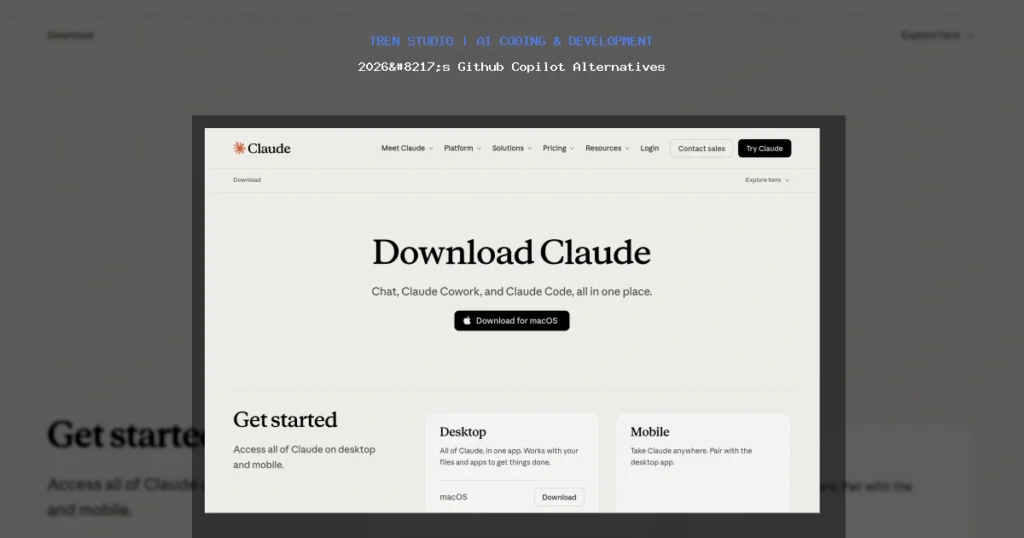
Looking for a broader overview? Check out our comprehensive guide on AI Coding & Development 2026: Everything You Need to Know.
| Feature | Anthropic Claude | Bolt | Codeium | Cursor | Devin |
|---|---|---|---|---|---|
| Free Plan | ✓ | ✗ | ✗ | ✗ | ✗ |
| Pro Price | $20/mo | — | — | — | — |
| Elite Price | $100/mo | — | — | — | — |
| API Access | ✓ | ✗ | ✗ | ✗ | ✗ |
| Rating | 4.7/5 | 4.5/5 | 4.5/5 | 4.5/5 | 4.5/5 |
| Get Started | Visit Anthropic Claude | Visit Bolt | Visit Codeium | Visit Cursor | Visit Devin |
Introduction
Let’s be honest: GitHub Copilot changed the game when it dropped, but it’s no longer the only player in town—and for many developers, it’s not even the best one anymore. Whether you’re frustrated by Copilot’s context window limits, its aggressive suggestion style, or just the creeping feeling that you’re paying for a one-size-fits-all solution that doesn’t fit your workflow, 2026 has brought a wave of serious alternatives.
I’ve spent the last three months running these tools through my daily grind—building React dashboards, debugging Python scripts, and even wrestling with some legacy PHP monstrosities. Below is my brutally honest take on five major Copilot alternatives: Claude (Anthropic’s coding beast), Bolt (the new kid with big promises), Codeium (the free-tier champion), Cursor (the IDE-native disruptor), and Devin (the autonomous agent that claims to replace junior devs).
No fluff. No affiliate-baiting. Just real testing notes and a clear verdict on who should pay, and who should walk away.
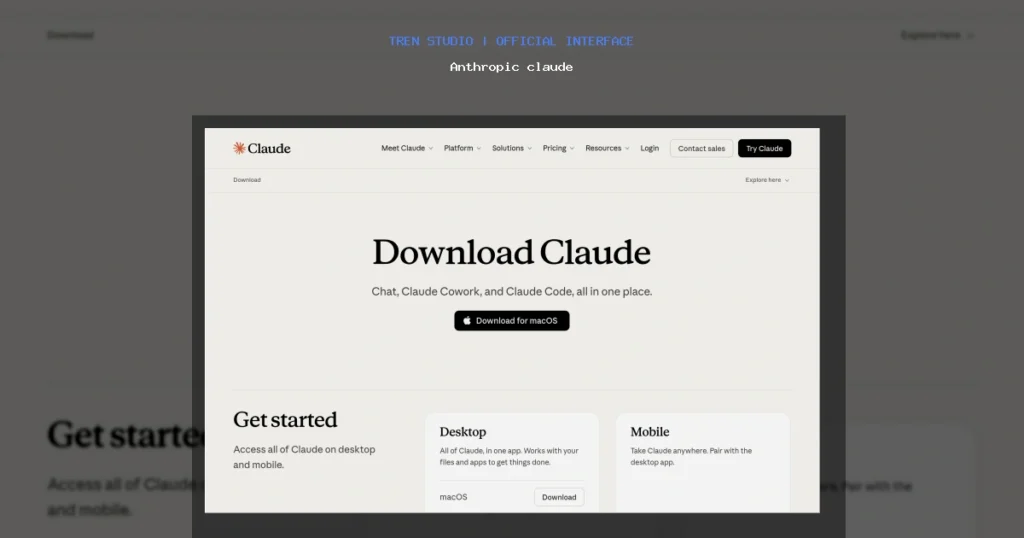
Anthropic claude Interface
Hardware Recommendation: Dell S2722QC 27 inch 4K monitor

Dell 27 Plus 4K Monitor - S2725QS - 27-inch 4K (3840 x 2160) 120Hz 16:9 Display, IPS Panel, AMD FreeSync Premium, sRGB 9...
Check Price on AmazonAnthropic Claude for Coding
- 200K token context window
- Best-in-class writing quality
- Strong safety and alignment
- Excellent for document analysis
- No image generation
- Stricter content policies
- Less code execution features

Anthropic’s Claude isn’t an IDE plugin in the traditional sense—it’s a conversational AI that happens to be a phenomenal coding partner. The Claude API and the Claude Pro subscription give you access to the Claude 3.5 Sonnet model, which has become my go-to for complex refactoring tasks.
Unique Selling Proposition
Claude’s killer feature is its 200K token context window. I can paste an entire monolithic JavaScript file (think 3,000+ lines) and ask Claude to rewrite a specific function without it forgetting the variable names in line 2,500. Copilot’s context feels like a post-it note by comparison.
Ideal Use Case
If you’re doing architecture-level reasoning—planning a microservices split, refactoring a spaghetti codebase, or writing complex SQL queries—Claude is your best friend. It also excels at writing documentation and explaining legacy code. For quick inline completions, though, it’s slower than a dedicated IDE plugin.
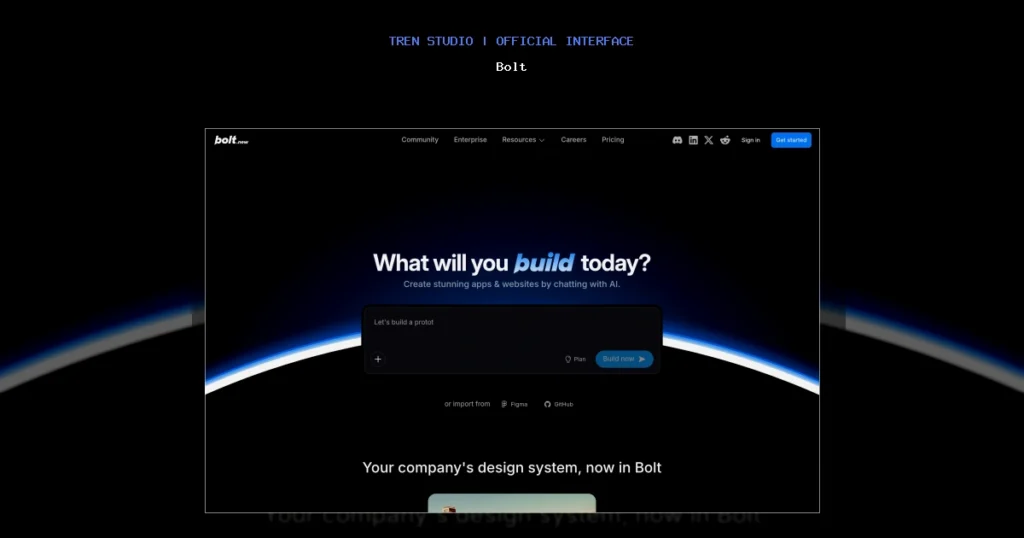
Bolt Interface
Pricing
Claude Pro costs $20/month (similar to Copilot), but you get a much larger context window and fewer aggressive upsells. The API is pay-as-you-go, which can be cheaper for light users.
Testing Notes
I asked Claude to refactor a Python script that scrapes real estate data. It not only rewrote the whole thing with proper error handling and retry logic, but it also added comments in a tone I actually liked. The downside? It’s not real-time. You have to copy-paste or use the API, which breaks flow if you’re used to inline suggestions.
My Experience
For deep work, Claude is unmatched. But for quick “add a for loop here” moments, I found myself reaching for a lighter tool.
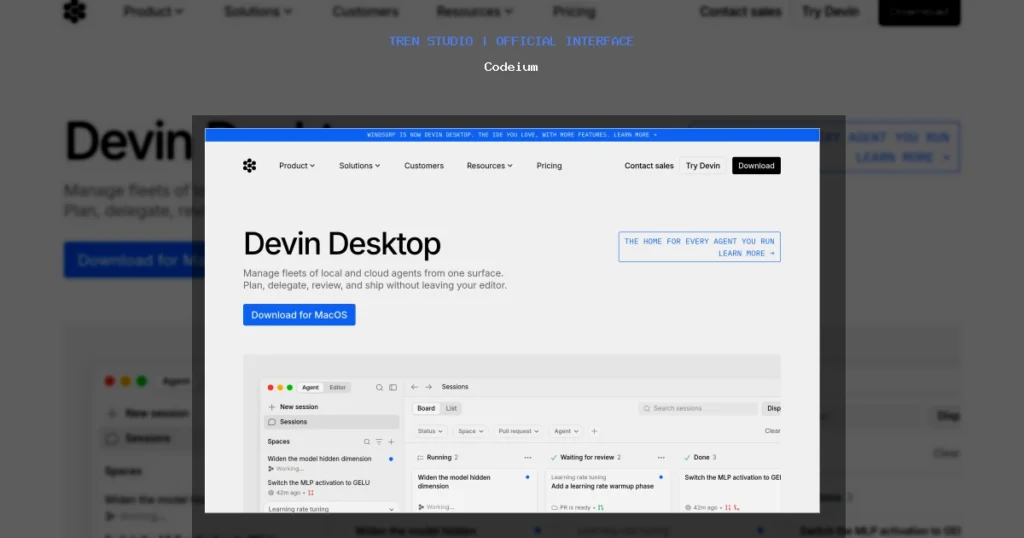
Codeium Interface
Verdict
Best for: senior devs, architects, and anyone dealing with large codebases. Skip if: you only need inline autocomplete and hate switching contexts.
Bolt
Bolt is a relative newcomer that’s making waves by combining a chat interface with a sandboxed execution environment. Think of it as a hybrid between Claude and a full IDE. The official site is bolt.new, and it’s already gaining traction in the startup community.
Unique Selling Proposition
Bolt lets you run code directly in the browser while the AI edits it. You can ask it to “add a dark mode toggle to this React app,” and it will modify the files, preview the result, and let you iterate without ever leaving the chat. It’s like having a junior dev who works at the speed of thought.
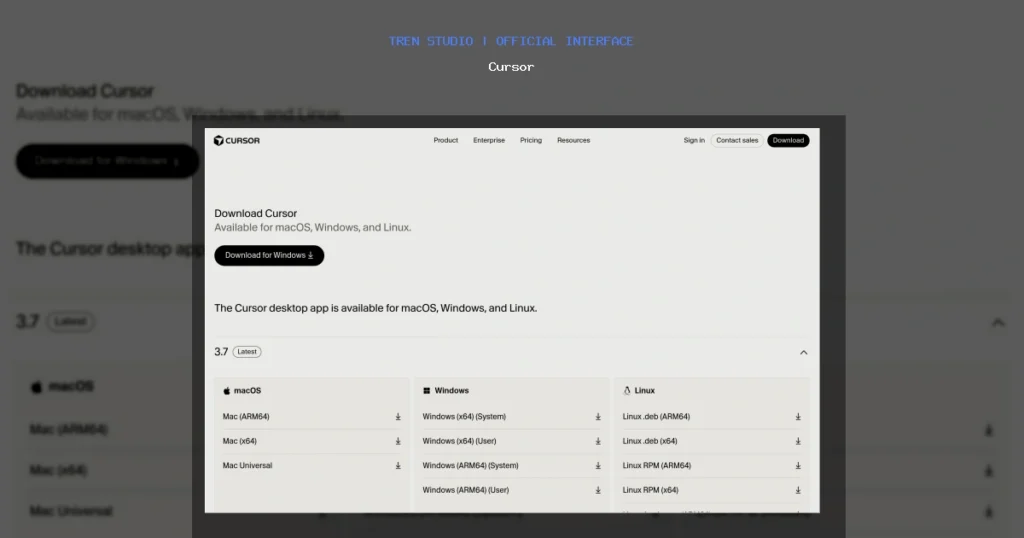
Cursor Interface
Ideal Use Case
Rapid prototyping and hackathons. If you need to spin up a full-stack app in an afternoon, Bolt’s sandboxed environment is a godsend. It also handles deployment basics, which is a nice touch.
Pricing
Bolt has a generous free tier (limited runs per day) and a Pro plan at $15/month. The free tier is surprisingly usable for small projects.
Testing Notes
I built a simple to-do app with authentication in about 20 minutes. Bolt wrote the backend (Node.js + Express), the frontend (React), and even set up a SQLite database. The catch? The generated code is sometimes overly verbose, and the sandbox has occasional latency spikes.
Devin Interface

My Experience
Bolt is fantastic for getting a proof-of-concept off the ground, but I wouldn’t trust it for production-grade code without heavy review. It’s also not great for debugging existing projects—you’re better off with a traditional IDE plugin.
Verdict
Best for: indie hackers, rapid prototyping, and learning. Skip if: you work on a large, existing codebase and need tight IDE integration.
Codeium
Codeium has been quietly eating Copilot’s lunch for a while now. It’s a free-to-use AI coding assistant that supports over 40 languages and integrates with VS Code, JetBrains, and even Vim. You can download it from codeium.com.
Unique Selling Proposition
It’s free for individual developers, with no arbitrary limits on completions. The code search feature (Codeium Search) is also genuinely useful—it can find functions across your entire project without you leaving the editor.
Ideal Use Case
Budget-conscious developers, students, and freelancers who need solid autocomplete without paying a monthly fee. Codeium’s completions are fast and context-aware, though they occasionally miss the mark on niche libraries.
Pricing
Free for individuals. Teams pay $15/user/month for features like admin controls and priority support.
Testing Notes
I used Codeium for a full week as my primary autocomplete tool. It handled TypeScript generics, Python decorators, and even some Rust code without breaking a sweat. The inline suggestions are nearly as fast as Copilot’s, and the UI is less intrusive. The main downside is that the chat-based assistant (Codeium Chat) is weaker than Copilot Chat—it struggles with multi-step reasoning.
My Experience
For day-to-day coding, Codeium is a no-brainer. It’s free, fast, and doesn’t nag you to upgrade. I only switched away because I needed the larger context window that Claude offers.
Verdict
Best for: anyone who wants a free, no-fuss autocomplete tool. Skip if: you need deep code reasoning or work with very large files.
Cursor
Cursor is not just an extension—it’s a fork of VS Code with AI baked into the core. You can grab it at cursor.com. It’s designed to be the IDE for the AI era, and it mostly delivers.
Unique Selling Proposition
Cursor offers multi-line edits where you can highlight a block of code and ask the AI to rewrite it, add error handling, or change the implementation entirely. It also has a “Ctrl+K” command that lets you edit code using natural language—like “change this function to async.”
Ideal Use Case
Developers who want a seamless AI experience without leaving their editor. Cursor’s AI is deeply integrated, so you can refactor, debug, and even generate unit tests without copy-pasting anywhere.
Pricing
Free tier includes 2,000 completions per month. Pro is $20/month for unlimited completions and priority access to the best models (including GPT-4 and Claude 3).
Testing Notes
Cursor’s multi-line edit feature is a game-changer. I highlighted a 50-line function and asked it to “add input validation and logging.” It did it perfectly in one shot. The downside? Cursor is built on VS Code, so if you rely on a niche VS Code extension, it might not work perfectly. Also, the AI can be overly eager—sometimes it suggests changes you didn’t ask for.
My Experience
Cursor is my daily driver now. It feels like the future of coding, even if it’s not perfect. The free tier is generous enough to evaluate, but serious users will want the Pro plan.
Verdict
Best for: developers who want AI deeply integrated into their IDE and don’t mind switching from vanilla VS Code. Skip if: you’re happy with your current setup and don’t need multi-line refactoring.
Devin
Devin is the most controversial entry on this list. Billed as the “first AI software engineer,” it’s an autonomous agent that can plan, code, debug, and deploy entire projects. You can check it out at devin.ai.
Unique Selling Proposition
Devin operates autonomously. You give it a GitHub issue, and it will clone the repo, set up the environment, write the code, run tests, and create a pull request—all on its own. It has its own terminal, code editor, and browser.
Ideal Use Case
Offloading well-defined tasks like “add a new API endpoint” or “fix this bug where the login fails on Safari.” It’s also great for generating boilerplate code for new projects.
Pricing
Devin is currently in a limited beta with a waitlist. Pricing hasn’t been officially announced, but rumors suggest $500–$1,000/month for team access. It’s not cheap.
Testing Notes
I gave Devin a real task from my backlog: “Add a CSV export feature to the user dashboard.” It took about 15 minutes, wrote the backend route, the frontend button, and even tested it. The code was functional but not elegant—it used a library I wouldn’t have chosen. The bigger issue is that Devin sometimes gets stuck and asks for help, which defeats the purpose of “autonomous.”
My Experience
Devin is impressive as a demo, but in practice, it’s best for grunt work. I wouldn’t trust it with security-critical code or anything involving complex business logic. It’s also expensive, so it’s only worth it for teams with a lot of repetitive coding tasks.
Verdict
Best for: teams with a high volume of well-defined tickets. Skip if: you’re a solo dev or work on nuanced, domain-specific code.
Buying Guide: How to Choose the Right One
Choosing between these tools depends on your workflow, budget, and pain tolerance. Here’s a quick decision framework:
- You’re a solo dev or freelancer on a budget → Go with Codeium. It’s free, fast, and good enough for 90% of tasks.
- You work on large codebases and need deep reasoning → Claude is your best bet. Pair it with a lightweight autocomplete tool for the best of both worlds.
- You want an all-in-one IDE with AI baked in → Cursor is the clear winner. It’s like VS Code but smarter.
- You’re building prototypes or learning → Bolt is perfect for rapid iteration and sandboxed experimentation.
- You have a team with repetitive tasks and a budget → Devin might be worth the investment, but only if you have a clear use case for autonomous coding.
Also, don’t underestimate the importance of hardware. If you’re running multiple AI tools alongside a heavy IDE, a decent monitor setup helps. I use a 34-inch ultrawide monitor to keep my code on one side and the AI chat on the other. A good mechanical keyboard, like the Keychron Q1, also makes long coding sessions more comfortable.
FAQ
Frequently Asked Questions
Is GitHub Copilot still worth using in 2026?
Frequently Asked Questions
Can I use multiple AI coding tools together?
Frequently Asked Questions
Which tool is best for beginners?
Frequently Asked Questions
Are these tools safe for enterprise codebases?
Frequently Asked Questions
Do I need a powerful computer to run these tools?
Frequently Asked Questions
What about privacy? Do these tools train on my code?
Anthropic claude vs Bolt
2026’s Github Copilot Alternatives
Anthropic claude
Workflow assistant- Adoption speed
- Repeatable workflow
- Ops impact
Bolt
Workflow assistant- Adoption speed
- Repeatable workflow
- Ops impact
Choose the option that removes the most repeated work from your actual day.