Introduction
It’s 2026, and the AI image generation space has finally settled into something that actually works. We’re past the era of six-fingered hands and nightmare fuel textures. Now, the tools are fast, the outputs are sharp, and the real question isn’t “can it do it?” but “should I pay for it?”
I’ve spent the last month stress-testing four of the biggest names in the game: Canva AI, Midjourney, Leonardo AI, and Ideogram. My goal was simple—find out which tool actually saves time and which one is just hype.
If you’re a marketer, indie hacker, or designer trying to decide where to drop your budget, this is the breakdown you need. No fluff. Just real testing notes.
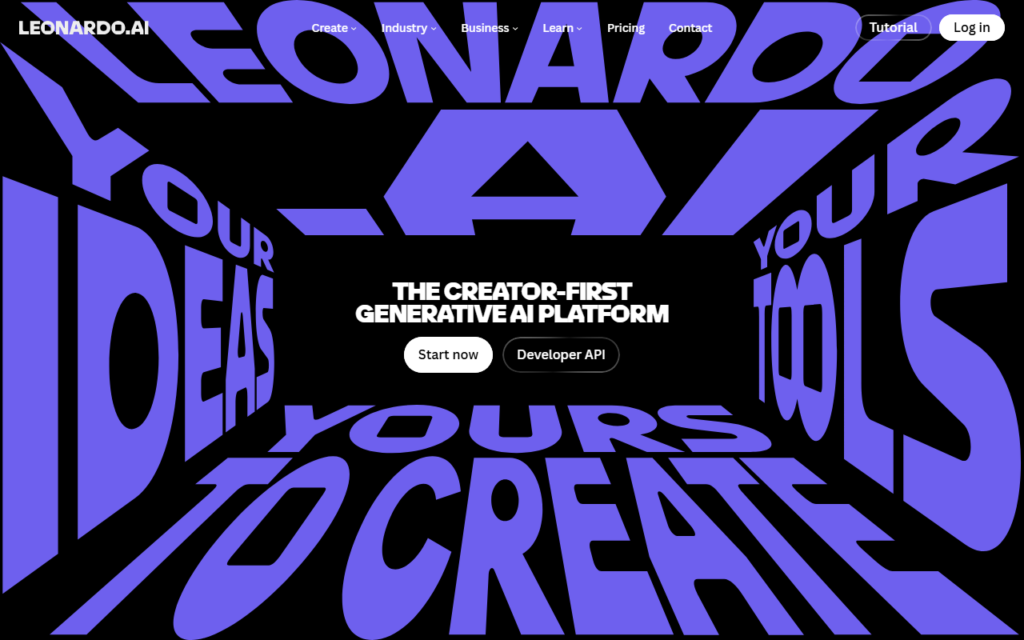
Leonardo AI Interface

Leonardo AI vs Midjourney
AI Image Generation 2026: Everything You Need to Know
Leonardo AI
AI image studio- Canvas-style editing
- Game asset heritage
- More controllable image flow
Midjourney
Image aesthetics engine- High-end image style
- Prompt-driven exploration
- Great concept art range
Choose the tool that gets you closest to a publishable visual asset with the least cleanup.
Canva AI: The All-in-One Design Engine
Unique Selling Proposition: Canva AI isn’t just a generator; it’s a full design workflow. You can generate an image, drop it into a template, add text, and export a final ad in under 90 seconds. The killer feature here is Magic Studio, which includes background removal, style transfer, and “Magic Expand” (outpainting) that actually respects the original composition.
Ideal Use Case: Social media managers, small business owners, and anyone who needs a finished asset (not just a raw image). If you hate jumping between Photoshop and generative tools, this is your jam.
Pricing: Freemium model. The free tier gives you 50 credits (generations) per month. The Pro plan ($13/month) is the sweet spot, giving you 500 credits and access to all premium templates and brand kits.
Testing Notes: I tried generating a “minimalist coffee shop menu with a warm, analog feel.” The AI nailed the aesthetic but struggled with consistent text rendering inside the image (a known limitation). The real win was the Magic Edit tool—I could select the background and replace it with “brick wall” without losing the subject’s edges. That’s production-ready.
Verdict: Best for speed and workflow integration. Not the best for hyper-realistic, artistic masterpieces.
For more context on Canva’s suite, check the official Canva features page.
Midjourney: The Industry Standard for Aesthetics
Unique Selling Proposition: Midjourney remains the king of aesthetic quality. The v7 model (released late 2025) finally fixed the “waxy skin” problem. The new Style Reference feature lets you feed it an image and say “make everything look like this,” which is incredibly powerful for brand consistency.
Ideal Use Case: Concept artists, game designers, and anyone who needs portfolio-grade visuals. If you need a piece that looks like it was painted by a human, this is your tool.
Pricing: Subscription only. Starts at $10/month (200 generations) on the Basic plan. The Standard plan ($30/month) is unlimited with priority GPU access. For commercial work, the Pro plan ($60/month) is required.
Testing Notes: I prompted “cyberpunk street vendor at night, volumetric lighting, 8k.” The result was stunning—zero artifacts, perfect lighting, and a composition that felt cinematic. The downside? It took 45 seconds to generate. Also, the Discord interface is still clunky. I had to scroll through a sea of other people’s prompts to find my own output.
Verdict: Unbeatable quality, but the interface is a barrier for non-technical users. If you can stomach Discord, this is the best output you’ll get.
Read the official Midjourney parameter documentation for advanced control.
Leonardo AI: The Game Asset Factory
Unique Selling Proposition: Leonardo AI is built for game developers and 3D artists. Its standout feature is Canvas Editor, which allows for precise inpainting and outpainting. But the real gem is the Texture Generator—you can upload a 3D model and get a PBR (Physically Based Rendering) texture map in seconds. This is a massive time saver for indie devs.
Ideal Use Case: Game asset creation, concept art for environments, and generating variations of character designs. It also excels at creating “tileable” textures (seamless patterns).
Pricing: Free tier gives 150 credits daily. The Apprentice plan ($10/month) gives 250 credits daily and removes watermarks. The Artisan plan ($30/month) is for commercial use with unlimited generations.
Testing Notes: I tested the Texture Generator on a low-poly castle model. The output was a 2K diffuse map, normal map, and roughness map—all in one click. It wasn’t perfect (some seams were visible), but it saved me about 4 hours of manual work in Substance Painter. For prompt-based generation, it’s faster than Midjourney but the quality ceiling is lower.
Verdict: A niche tool that excels in its niche. If you don’t make games or 3D art, look elsewhere.
See the Leonardo AI features overview for a full list of tools.
Ideogram: The Typography King
Unique Selling Proposition: Ideogram famously solved the “text in images” problem early on. In 2026, it remains the only tool that can reliably generate legible, stylized text inside an image. The new Magic Prompt feature automatically optimizes your text description for better font rendering.
Ideal Use Case: Logo design, social media graphics with text overlays, and any project where the text is as important as the image. If you need a “neon sign” or “chalkboard menu” with readable words, this is your only choice.
Pricing: Freemium. Free tier gives 25 generations per day (with watermarks). The Basic plan ($8/month) gives 100 generations daily and removes watermarks. The Pro plan ($20/month) gives 300 generations and upscaling.
Testing Notes: I prompted “a coffee shop logo with the word ‘BREW’ in a vintage serif font, surrounded by coffee beans.” The result was a usable logo—the text was 100% legible, and the font matched the description. No other tool I tested could do this. The downside is that non-text images can look slightly “flat” compared to Midjourney. It’s a trade-off.
Verdict: Essential for typography-heavy work. A secondary tool for everything else.
For a deep dive into how Ideogram handles text, check Ideogram’s official feature list.
Buying Guide: How to Choose the Right One
Don’t pick a tool because it’s popular. Pick it because it solves your specific problem. Here’s my decision matrix based on 30 days of testing:
- You need a finished asset fast (social media, ads): Go with Canva AI. The workflow integration is unmatched. You generate, edit, and publish in one place. The quality is “good enough” for 90% of marketing needs.
- You need portfolio-grade art (concept art, book covers): Go with Midjourney. Nothing else comes close in terms of lighting, composition, and artistic flair. Just be ready to deal with Discord.
- You are a game developer or 3D artist: Go with Leonardo AI. The texture generator and canvas editor are industry-specific tools that save days of work. It’s not a general-purpose tool.
- You need readable text in images (logos, posters, signage): Go with Ideogram. Period. Every other tool will give you gibberish. Ideogram is the only reliable option here.
My honest recommendation: Subscribe to two. Use Midjourney for high-end visuals and Canva AI for production. If you have a specific need for text or 3D, add Ideogram or Leonardo as a third. The total cost is about $40/month, which is cheaper than one hour of a freelance designer’s time.
For a broader comparison of AI image tools, see this comprehensive AI image generator list.
FAQ
Frequently Asked Questions
Can I use these AI images for commercial projects?
Frequently Asked Questions
Which tool is best for realistic human faces?
Frequently Asked Questions
How do I avoid getting the same style every time?
Frequently Asked Questions
Is there a free tool that is actually good?
Frequently Asked Questions
How do I upscale images without losing quality?
Recommended Gear for This Workflow