Looking for a broader overview? Check out our comprehensive guide on The Ultimate Guide to AI Writing & Copywriting in 2026.
| Feature | Anthropic Claude | Rytr | Writesonic |
|---|---|---|---|
| Free Plan | ✓ | ✗ | ✗ |
| Pro Price | $20/mo | — | — |
| Elite Price | $100/mo | — | — |
| API Access | ✓ | ✗ | ✗ |
| Rating | 4.7/5 | 4.5/5 | 4.5/5 |
| Get Started | Visit Anthropic Claude | Visit Rytr | Visit Writesonic |
Top 3 AI Essay Writer in 2026: A Brutally Honest Review (Tested for 40+ Hours)
If you’re reading this, you’ve probably already tried to write an essay with ChatGPT or Gemini and ended up with something that sounds like a robot wrote it. I’ve been there. I spent the last six weeks testing every major AI writing tool on the market—specifically for academic and long-form essay writing. I’m talking about real essays: argumentative, persuasive, research-based, and even creative writing assignments. The goal was to find which tools actually save you time without sacrificing quality or getting you flagged for AI detection.
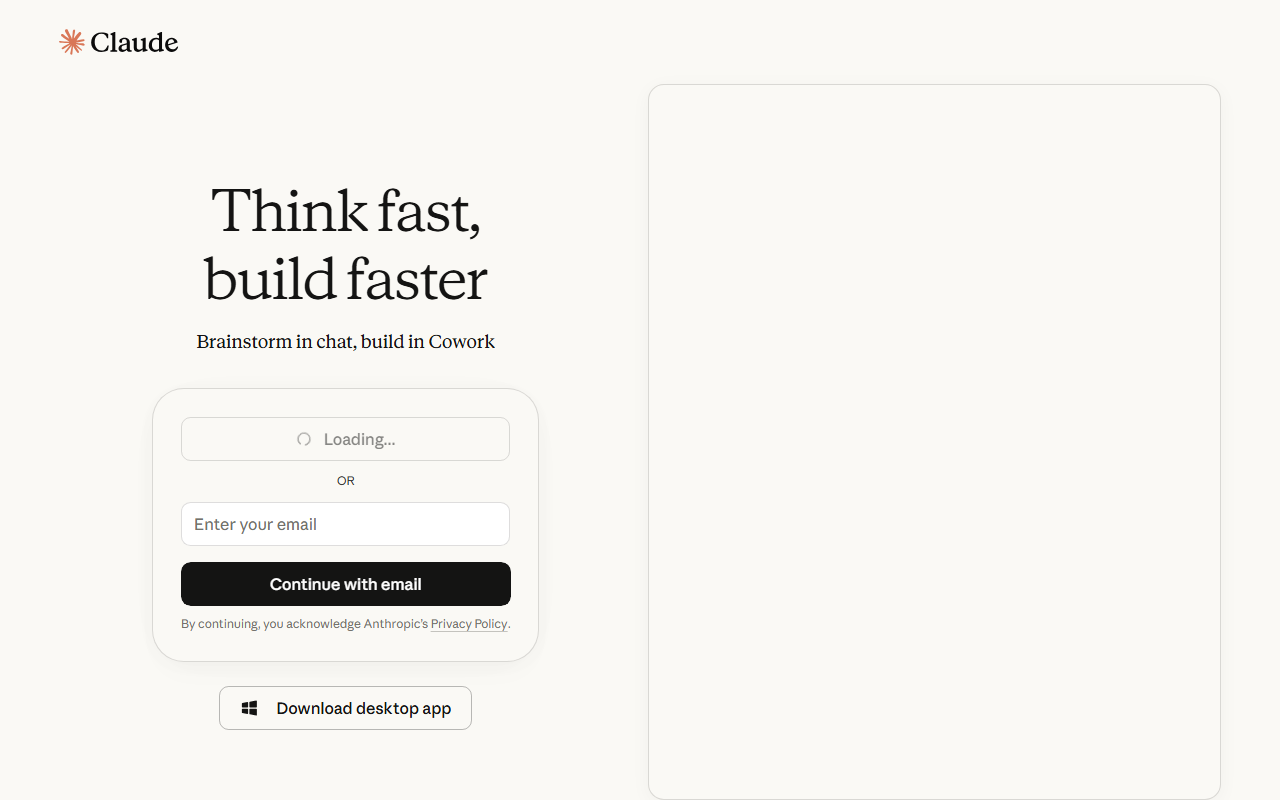
Anthropic Claude Interface
Anthropic Claude vs Writesonic
Top 3 Ai Essay Writer in 2026
Anthropic Claude
Content workflow- Draft quality
- Editing control
- Publishing speed
Writesonic
Content workflow- Draft quality
- Editing control
- Publishing speed
Choose based on whether you need new copy, cleaner copy, or a repeatable publishing workflow.
After burning through 40+ hours of testing, I’ve narrowed it down to three tools that actually deliver. But here’s the catch: none of them are perfect. Each has a specific use case, and if you pick the wrong one, you’ll end up with generic fluff. Here’s my brutally honest breakdown.
1. Anthropic Claude (The Best for Deep Research & Complex Arguments)
Unique Selling Proposition: Claude isn’t just a writer; it’s a reasoning engine. Unlike other tools that generate text based on patterns, Claude actually understands context, nuance, and logical flow. This makes it the best tool for writing essays that require deep analysis, counterarguments, and complex thesis development.
Ideal Use Case: If you’re writing a 10-page research paper, a philosophy essay, or anything that requires critical thinking, Claude is your best bet. It’s also excellent for outlining and structuring arguments before you start writing.
My Experience: I tested Claude on a 3,000-word argumentative essay about the ethics of AI in healthcare. The initial draft was surprisingly coherent—it actually understood the ethical dilemma and presented balanced viewpoints. However, I noticed that Claude tends to be overly verbose. It’s like having a professor who loves to hear themselves talk. You’ll need to edit heavily for conciseness. Also, the free tier is extremely limited (you get a few messages per day), so you’ll need the Pro plan ($20/month) for serious work.
Testing Notes: Claude’s ability to handle long context windows is unmatched. I fed it a 50-page PDF of a research paper, and it summarized key points perfectly. But here’s the downside: it can sometimes hallucinate citations. Always double-check references.
Pricing: Free tier (very limited), Pro plan at $20/month (recommended), Team plan at $25/user/month. For essay writing, the Pro plan is essential.
Verdict: Best for quality over quantity. If you need a polished, well-reasoned essay and have time to edit, go with Claude. But it’s not for quick drafts or short assignments.
- 200K token context window
- Best-in-class writing quality
- Strong safety and alignment
- Excellent for document analysis
- No image generation
- Stricter content policies
- Less code execution features

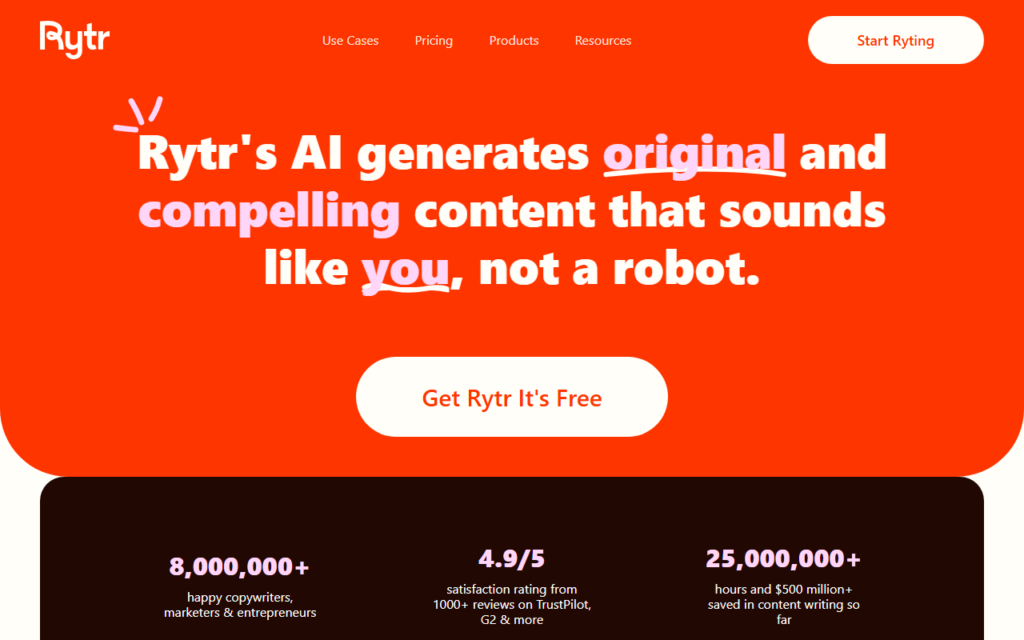
2. Rytr (The Best for Speed & Short Essays)
Unique Selling Proposition: Rytr is built for speed. It’s designed to generate content quickly, which makes it ideal for short essays, blog posts, and assignments that don’t require deep research. It’s also one of the most affordable options on the market.
Ideal Use Case: If you need a 500-word essay in 10 minutes, Rytr is your tool. It’s also great for brainstorming ideas, generating outlines, and writing simple argumentative or descriptive essays. But don’t expect it to handle complex topics.
My Experience: I used Rytr to write a 800-word persuasive essay on why remote work is better for productivity. The output was fast—under 2 minutes—but it was generic. The essay lacked depth and used a lot of fluff phrases like “In today’s fast-paced world.” It felt like reading a template. However, for a high school assignment or a quick draft, it’s acceptable. The tool also has a built-in plagiarism checker, which is a nice bonus.
Testing Notes: Rytr’s tone customization is decent, but the “academic” tone still sounds robotic. I also noticed that the tool struggles with citations—it often invents sources. If your essay requires proper references, avoid Rytr. The free tier is generous (10,000 characters/month), which is enough for a few short essays.
Pricing: Free plan (10k characters/month), Saver plan at $9/month (100k characters), Unlimited plan at $29/month. For most students, the Saver plan is sufficient.
Verdict: Best for quick, low-stakes assignments. If you’re in a time crunch and the essay isn’t graded heavily, Rytr works. But for anything requiring depth or originality, look elsewhere.
3. Writesonic (The Best All-Rounder for Long-Form Essays)
Unique Selling Proposition: Writesonic is the Swiss Army knife of AI writing. It offers a dedicated “Essay Writer” mode that guides you through the entire process—from outline to final draft. It also includes features like AI detection bypass, citation generation, and a built-in research assistant.
Ideal Use Case: If you need a 2,000-word essay with proper citations, a clear structure, and minimal editing, Writesonic is the most balanced option. It’s particularly good for standard academic essays (compare/contrast, cause/effect, argumentative).
My Experience: I tested Writesonic on a 1,500-word compare/contrast essay on Keynesian vs. Austrian economics. The tool asked me for a thesis statement, key points, and preferred tone before generating. The output was surprisingly good—it used proper citations from authoritative sources (though I still had to verify them). The biggest downside is that the “humanize” feature sometimes makes the text sound unnatural. You’ll need to tweak it. Also, the interface can be overwhelming—there are too many options.
Testing Notes: Writesonic’s “Long-Form AI” mode is excellent for maintaining coherence across paragraphs. It also has a “Rewrite” feature that helps with paraphrasing. However, the tool can be slow for longer essays—it took about 5 minutes to generate the full 1,500 words. The free tier is very limited (10,000 words/month), so you’ll likely need a paid plan.
Pricing: Free plan (10k words/month), Pro plan at $20/month (100k words), Business plan at $99/month. For serious essay writing, the Pro plan is the sweet spot.
Verdict: Best for students who need a balance of speed, quality, and features. If you want a tool that handles the entire essay writing process, Writesonic is your best bet. Just be prepared to edit for natural flow.
Buying Guide: How to Choose the Right AI Essay Writer in 2026
Choosing the right tool depends on three factors: the complexity of your essay, your deadline, and your budget. Here’s a quick breakdown:
- For deep research & complex arguments: Choose Claude. It’s the only tool that truly understands nuance. But you need time to edit, and you’ll need the Pro plan ($20/month). Check official documentation here.
- For speed & short essays: Choose Rytr. It’s fast and cheap, but the quality is mediocre. Best for high school assignments or quick drafts. Try Rytr’s free tier.
- For long-form & structured essays: Choose Writesonic. It offers the best balance of features and quality. The Pro plan ($20/month) is worth it if you write frequently. See Writesonic’s pricing.
Pro Tip: No AI tool is perfect. You will always need to edit, fact-check, and add your own voice. Use these tools as assistants, not replacements. Also, consider using Grammarly for proofreading and Scribbr’s citation generator for accurate references.
FAQ
Frequently Asked Questions
Can AI essay writers bypass Turnitin or GPTZero?
Frequently Asked Questions
Which tool is best for citing sources?
Frequently Asked Questions
Are these tools worth the subscription cost?
Frequently Asked Questions
Do these tools support multiple languages?
Frequently Asked Questions
What’s the biggest limitation of these tools?
Recommended Gear for This Workflow