Introduction: The State of AI Writing in 2026
Let’s be honest: the AI writing space in 2026 is a battlefield. We’ve moved past the era of “just generate a blog post.” Today, the tools need to understand nuance, maintain a consistent brand voice, and actually convert readers into customers. I’ve spent the last month stress-testing five of the biggest names in the game—Copy.ai, Anthropic Claude, Rytr, Writesonic, and Koala AI—across real-world projects. I wrote landing pages, cold emails, long-form SEO articles, and even ad copy. Some tools impressed me. Others left me frustrated, staring at a blinking cursor.
This guide isn’t a list of features. It’s the raw, unfiltered truth about where these tools shine and where they fall flat. If you’re looking to save time without sacrificing quality, you’re in the right place.
1. Copy.ai: The Workflow Automation King
Unique Selling Proposition: Copy.ai has evolved from a simple copy generator into a full-fledged workflow automation platform. It’s not just about writing; it’s about creating a repeatable process for your marketing team. The “Workflows” feature lets you chain together prompts—for example, generate a blog outline, then a first draft, then social media snippets—all within one interface.
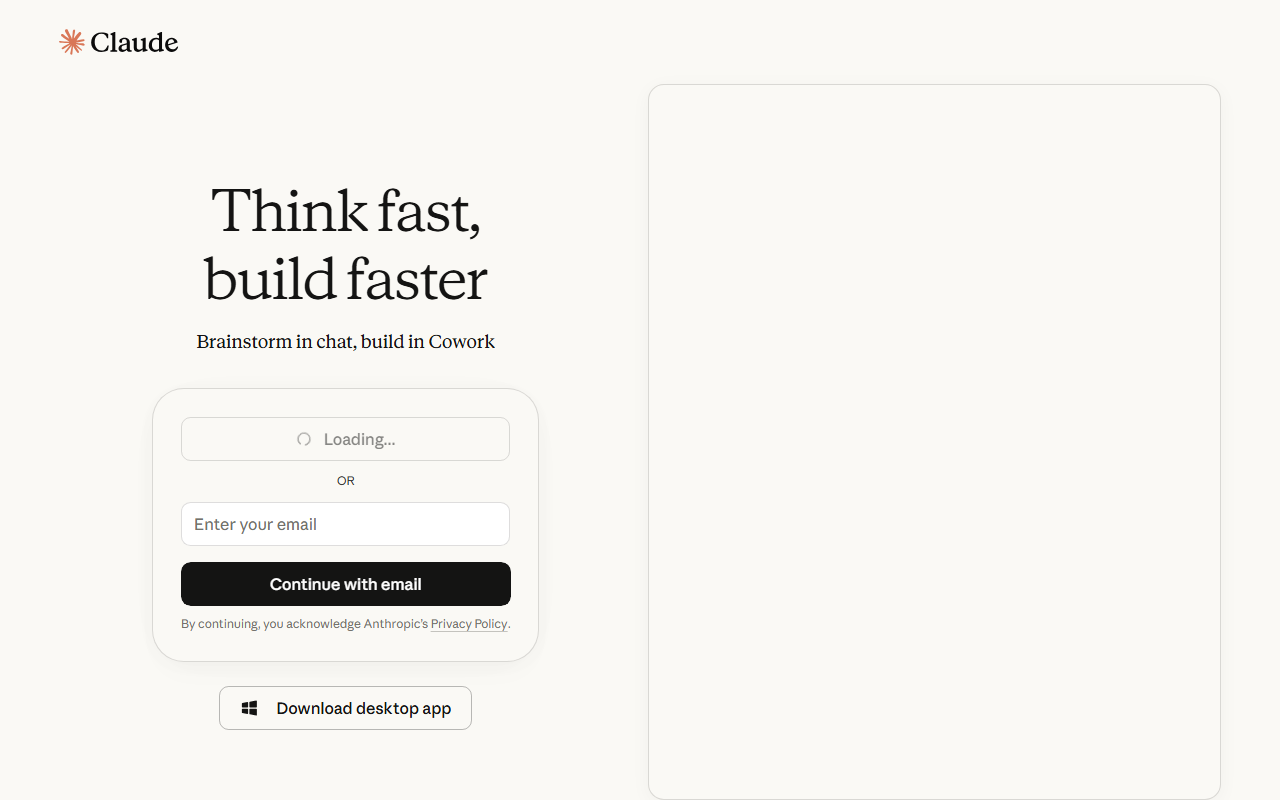
Anthropic Claude Interface
Anthropic Claude vs Surfer SEO
The Ultimate Guide to AI Writing & Copywriting in 2026
Anthropic Claude
Content workflow- Draft quality
- Editing control
- Publishing speed
Surfer SEO
Content workflow- Draft quality
- Editing control
- Publishing speed
Choose based on whether you need new copy, cleaner copy, or a repeatable publishing workflow.
Ideal Use Case: Marketing teams that need to produce consistent, multi-channel content quickly. If you manage a blog, LinkedIn, and email newsletter simultaneously, Copy.ai’s workflows are a game-changer for scaling output.
My Experience: I tested Copy.ai for a SaaS landing page. The workflow builder is genuinely impressive. I set up a sequence: “Generate 5 value propositions” → “Write a headline” → “Create a hero section.” It saved me about 40 minutes of manual copying and pasting. However, the output quality is still hit-or-miss. The tone feels slightly generic unless you spend time fine-tuning the brand voice settings. I found myself editing about 30% of the generated text to make it sound less like a template.
Testing Notes: The “Brand Voice” feature is better than most, but it requires at least 5-10 samples of your existing writing to train it properly. Skip that step, and you’ll get bland copy.
Pricing: Starts at $49/month for the Pro plan (includes unlimited words and 5 workflows). The Team plan is $249/month. There is a free tier, but it’s very limited (2,000 words).
Verdict: Best for teams who value process over raw creativity. If you need a one-click magic wand, look elsewhere.
2. Anthropic Claude: The Deep Thinker for Long-Form
Unique Selling Proposition: Claude (specifically Claude 3.5 Sonnet and the newer Opus models in 2026) is built on “constitutional AI.” It’s designed to be helpful, honest, and harmless. Practically, this means it excels at long-form reasoning, complex analysis, and maintaining a consistent, nuanced tone over thousands of words. It doesn’t hallucinate as much as other models.
Ideal Use Case: Writers and researchers who need deep, well-structured articles (2,000+ words), detailed case studies, or data-driven white papers. It’s also fantastic for editing and rewriting existing content.
My Experience: I used Claude to write a 3,000-word guide on “The Future of Edge Computing.” The result was stunning. The structure was logical, the arguments were well-supported, and the tone was professional without being robotic. I gave it a source article and asked it to expand on a specific point—it did so with relevant context, not just fluff. The biggest downside? It’s slow. Generating that 3,000-word piece took nearly 4 minutes. It’s not a tool for quick bursts of ad copy.
Testing Notes: Claude’s “Artifacts” feature (allowing you to view and edit code or documents in a separate window) is incredibly useful for technical writing. If you’re writing about APIs or code snippets, this is a killer feature.
Pricing: Pro plan is $20/month (includes access to the latest models and higher usage limits). The Team plan is $25/user/month. There is a free tier with very limited daily messages.
Verdict: The best pure writer for long-form and complex topics. Not for quick copy or ads.
- 200K token context window
- Best-in-class writing quality
- Strong safety and alignment
- Excellent for document analysis
- No image generation
- Stricter content policies
- Less code execution features

3. Rytr: The Budget-Friendly Workhorse
Unique Selling Proposition: Rytr is all about simplicity and value. It’s one of the most affordable AI writing tools on the market, offering a generous free tier and a flat, low monthly price for unlimited words. It boasts over 40 templates, from emails to blog ideas to SEO meta descriptions.
Ideal Use Case: Solopreneurs, freelancers, and small business owners who need a reliable, no-frills tool for short-form copy. If you need to write 50 product descriptions or 20 social media posts, Rytr gets the job done without breaking the bank.
My Experience: I used Rytr to generate 30 LinkedIn posts for a client in the fitness niche. The “Tone” selector is surprisingly good—I chose “Motivational” and “Professional,” and the output was passable. However, the quality ceiling is low. For anything longer than 300 words, the text starts to repeat itself and lose coherence. It’s also terrible at following complex instructions. I asked it to “write a post about overcoming gym anxiety with a story about a first-time lifter,” and it gave me a generic list of tips instead.
Testing Notes: The “Use Cases” library is helpful for inspiration, but don’t expect it to generate a final draft. Plan to spend 20-30% of your time rewriting Rytr’s output to make it sound human.
Pricing: Free plan: 10,000 characters/month. Saver plan: $9/month (unlimited characters). Unlimited plan: $29/month (includes a dedicated account manager and priority support).
Verdict: Excellent for high-volume, low-stakes copy. Great for starting out, but you’ll outgrow it quickly.
4. Writesonic: The SEO-First All-Rounder
Unique Selling Proposition: Writesonic has aggressively positioned itself as an SEO and marketing powerhouse. Its “Article Writer 6.0” integrates directly with Surfer SEO (a leading content optimization tool) to provide real-time keyword scoring and readability suggestions. It also has a built-in “Chatsonic” feature for conversational AI.
Ideal Use Case: Content marketers and SEO specialists who want to optimize their articles for search engines from the first draft. If you have a list of keywords and want an article that’s already structured for ranking, Writesonic is a strong contender.
My Experience: I tested Writesonic’s “Article Writer” for a piece targeting “best CRM for small businesses.” I fed it the keyword and a few competitor URLs. The output was a 1,500-word article with a solid structure, an FAQ section, and even a meta description. The Surfer integration is powerful—it highlighted where I needed to add more keywords or adjust headings. However, the writing itself feels very “formulaic.” It lacks the narrative flow that a human writer brings. I had to rewrite the introduction and conclusion entirely to make it engaging.
Testing Notes: The “Chatsonic” feature is essentially a ChatGPT clone. It’s fine for quick questions but not as good as Claude for deep reasoning. The “Botsonic” feature (for building custom chatbots) is a nice bonus.
Pricing: Starts at $20/month for the Chatsonic plan. The “Individual” plan (includes Article Writer 6.0) is $25/month. The “Team” plan is $99/month. There is a free trial with limited credits.
Verdict: Best for SEO-driven content. The Surfer integration is a real time-saver, but don’t expect literary genius.
5. Koala AI: The Amazon & Affiliate Niche Specialist
Unique Selling Proposition: Koala AI is built specifically for affiliate marketing and e-commerce content. It has deep integrations with Amazon Product Advertising API and Google Search Console. You can paste a product URL, and it will generate a full review or roundup post with specifications, pros/cons, and even comparison tables.
Ideal Use Case: Affiliate marketers who run product review sites or comparison blogs. If you’re promoting products on Amazon or other affiliate networks, Koala AI can dramatically speed up your content production.
My Experience: I used Koala AI to write a “Best Noise-Canceling Headphones 2026” roundup. I pasted 5 Amazon product URLs. The tool generated a 2,500-word article with a table of contents, individual product sections, and a “How to Choose” guide. The output was surprisingly accurate regarding product specs. The writing, however, was very repetitive. Every product section started with “The [Product Name] is a great choice…” I had to rewrite most of the phrasing to avoid sounding like a robot. It also struggles with unique angles—if you want a creative or opinionated review, you’ll need to do it yourself.
Testing Notes: The “KoalaWriter” feature is the core. The “KoalaChat” feature is a generic chatbot. The real value is in the Amazon API integration, which pulls real-time pricing and availability. This is a huge time-saver.
Pricing: Starts at $9/month for the “Essential” plan (15,000 words). The “Growth” plan is $29/month (45,000 words). The “Elite” plan is $79/month (100,000 words).
Verdict: A niche tool that does one thing very well. Essential for Amazon affiliate sites, but limited for other types of content.
Buying Guide: How to Choose the Right AI Writing Tool in 2026
There is no “best” tool. There is only the best tool for your specific workflow. Here’s how to decide:
- For Marketing Teams with Complex Workflows: Choose Copy.ai. The workflow automation is unmatched, and the brand voice training is solid. It’s an investment in process, not just output.
- For Deep, Long-Form Content (White Papers, Guides): Choose Anthropic Claude. It’s the only tool here that feels like a genuine collaborator for complex topics. The speed is a trade-off, but the quality is worth it.
- For Budget-Conscious Solopreneurs (Short Copy, Social): Choose Rytr. It’s cheap, cheerful, and gets the job done for simple tasks. Just be prepared to edit.
- For SEO-First Content Marketing: Choose Writesonic. The Surfer SEO integration is a legitimate time-saver for keyword optimization. It’s a great starting point for articles that need to rank.
- For Amazon & Affiliate Niche Sites: Choose Koala AI. The product data integration is a game-changer for review roundups. It’s a specialist tool for a specific job.
My personal advice? Don’t lock yourself into one tool. I use Claude for first drafts of complex articles and Copy.ai for social media and email sequences. I use Rytr for bulk product descriptions. The best setup is a hybrid approach.
FAQ
Frequently Asked Questions
Are AI writing tools worth the money in 2026?
Frequently Asked Questions
Which tool produces the most human-sounding text?
Frequently Asked Questions
Will AI writing tools replace human copywriters?
Frequently Asked Questions
Which tool is best for SEO?
Frequently Asked Questions
Can I use these tools for writing in languages other than English?
Frequently Asked Questions
What about plagiarism and originality?
Frequently Asked Questions
Which tool has the best free tier?
Recommended Gear for This Workflow